
Was It Really Worth It? Australia Changed the Property Rules But Has It Fixed The Housing Problem?
For years, Australians have been told that one of the major reasons younger buyers have struggled to enter the property market is the tax advantage enjoyed by property investors.
In 2026, the Federal Government decided to do something significant about it. Changes announced in the Federal Budget will reshape both capital gains tax (CGT) and negative gearing, with the Government arguing the reforms will level the playing field for first-home buyers and redirect investment towards the construction of new housing.
But several months after the announcement, an uncomfortable question deserves to be asked: Was it really all worth it?
While investor activity has weakened and property prices have started to soften in parts of the country, Australia’s underlying housing problem remains stubbornly familiar. We still don’t have enough homes.
The CGT experiment
From 1 July 2027, the existing 50 per cent CGT discount will generally be replaced by inflation-based indexation, together with a minimum 30 per cent tax on real capital gains.
Importantly, the reforms are prospective, meaning gains accumulated before the commencement date retain the existing treatment. New residential construction also receives preferential treatment as the Government attempts to direct investment towards increasing supply.
Negative gearing is also being redirected towards new housing. For established residential properties purchased after the Budget announcement, investors will no longer generally be able to deduct rental losses against salary and other unrelated income, although losses can be carried forward against future residential property income.
The policy objective is clear. Reduce the tax advantage for investors buying established homes, give owner-occupiers a better chance of competing and encourage investment into new construction.
On paper, there is logic to it, but property markets rarely behave neatly on paper. The initial reaction has been substantial.
Investor lending has fallen sharply, and the major banks have reported significant declines in mortgage applications. Westpac reported mortgage applications falling around 20 per cent following the tax changes, while the broader housing market has experienced weaker auction clearance rates and softer prices.
National home loan commitments fell 5.2 per cent in the June quarter, with investor lending particularly affected. So, if the intention was to cool investor demand, there is evidence that it has worked. But reducing investor demand isn’t necessarily the same thing as solving housing affordability.
And that’s where the debate becomes much more complicated. For years the headlines surrounding Australian housing have effectively told the same story: this is one of the worst periods for first-home buyers in generations.
A parliamentary examination of home ownership noted that housing affordability had reached its worst level on record, with a typical household earning $112,000 able to afford only around 14 per cent of Australian homes.
In 1971, around 50 per cent of Australians aged 25 to 29 owned a home. The housing stock therefore expanded very rapidly relative to the size of the population. Between 1961 and 1971, Australia's dwelling stock increased by roughly 35%, from 2.98 million to 4.01 million. And between 1971 and 1981, another 1.13 million dwellings were added, taking the stock from about 4.01 million to 5.14 million, an increase of approximately 28%.
The really important difference
Population growth itself wasn't necessarily low. Australia was actually growing quite strongly. The ABS estimates Australia's population growth rate at 3.38% in 1971, although it subsequently moderated to 1.84% in 1972 and 1.53% in 1973. But housing construction was keeping up much more effectively with population growth.
After WWII, Australia faced an estimated shortage of about 300,000 dwellings. The Commonwealth responded with the first Commonwealth-State Housing Agreement (CSHA) in 1945, under which the federal government provided funding to the states to construct housing. Public housing wasn't viewed solely as welfare housing. It was also used to accommodate working households, support workforce participation and stimulate economic activity.
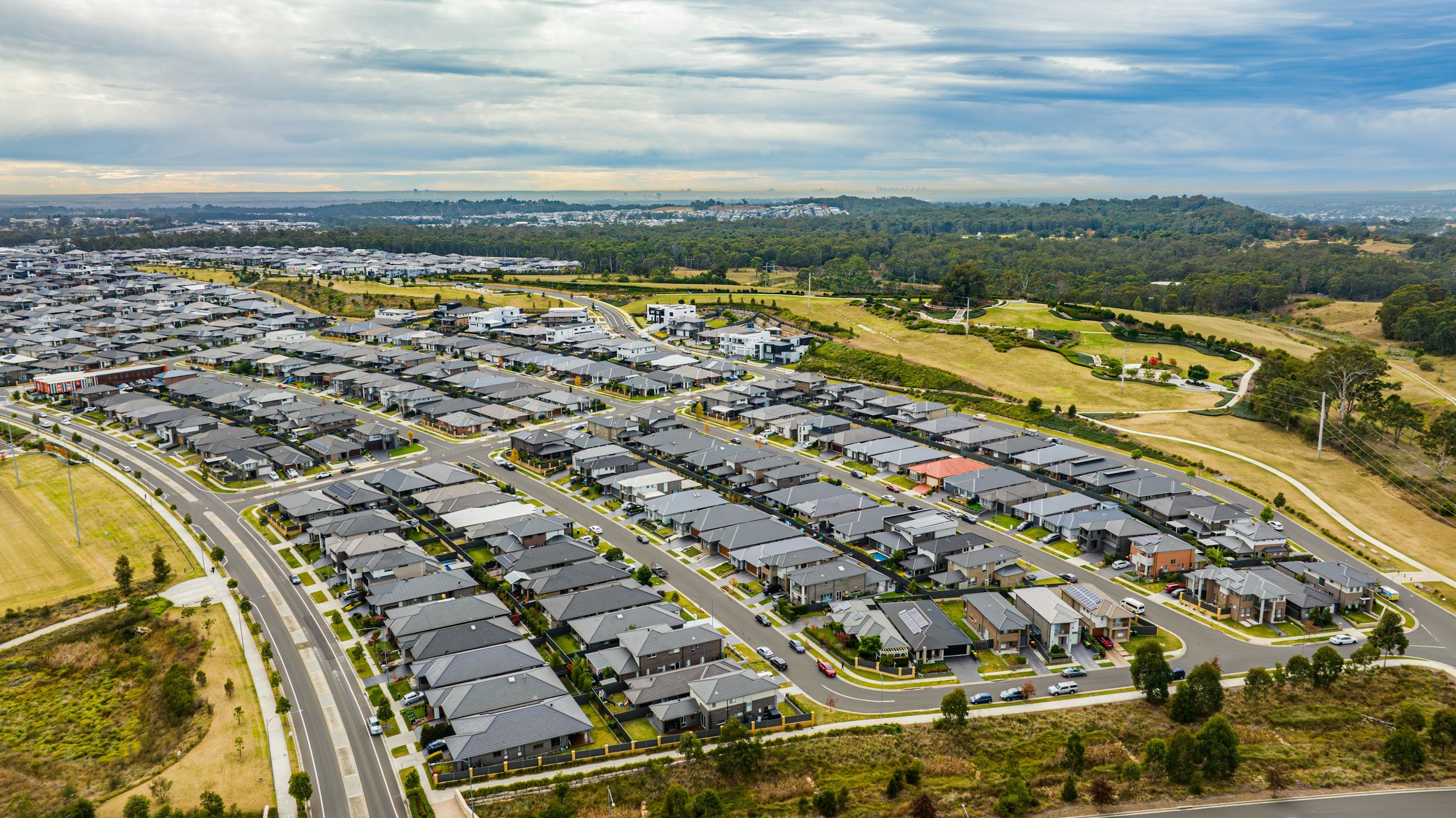
Suburban growth
What was different in the 1960s and 1970s?
Governments were effectively participants in housing supply, rather than relying predominantly on private developers to deliver new stock.
The Commonwealth financed housing programs through successive Commonwealth-State Housing Agreements, while state housing authorities developed substantial estates and housing projects. This occurred alongside major private-sector construction and suburban expansion.
So, when we look at that statistic that around 50% of Australians aged 25 to 29 owned a home in 1971, there were several things occurring simultaneously:
Australia was building housing rapidly.
Governments were directly financing and facilitating substantial public housing construction.
Large areas of relatively inexpensive suburban land were being opened for development.
Home prices were much lower relative to household incomes.
Government housing policy was focused heavily on increasing the physical supply of dwellings.
That's an important distinction from today's debate.
Public housing was a meaningful part of overall supply
Australia's public-housing system expanded dramatically after 1945 under the CSHA. The original agreement was specifically designed to fund construction of new dwellings and made government-provided housing a much more prominent part of Australia's housing system.
In other words, the headline about first-home buyers facing their toughest conditions in roughly 50 years isn’t simply media exaggeration. There has been a profound structural deterioration in the ability of younger Australians to own property.
The Government argues that investor tax concessions contributed to that problem. Prime Minister Anthony Albanese has pointed out that since the CGT discount was introduced in 1999, Australian house prices have increased by more than 400%, more than twice the growth in average incomes. But correlation isn’t necessarily the whole explanation.
This is arguably the elephant in the room. Australia’s National Housing Accord targets 1.2 million new homes by 2029. Yet construction is running well behind the pace required to achieve it.
Government was also a far more active participant in housing delivery. Public housing represented around 5% of Australia's housing stock from the mid 1960s, but state housing authorities had accounted for a considerably larger share of new construction during the post-war housing boom. In 1964–65, public housing represented around 14% of housing production, following levels of approximately 20% a decade earlier. Governments weren't simply trying to influence demand. They were directly helping create supply.
Recent analysis indicates Australia is approximately 27 per cent below the quarterly construction rate required, with labour shortages, building costs, financing costs, planning delays and builder insolvencies continuing to constrain supply.
And that raises an obvious question. If Australia needs dramatically more housing, how much sense does it make to create uncertainty among the very investors whose capital ultimately helps finance housing?
Redirecting investment from established housing towards new construction could ultimately increase supply, and that is precisely what the Government hopes will happen. But if investors instead decide property is simply less attractive and withdraw altogether, the consequences could be very different.
Fewer investors can mean fewer rental properties. Fewer rental properties can mean higher rents. Higher rents make it harder for first home buyers to save deposits.
What happens when lenders decide to change credit policy because they are overexposed in certain areas due to the number of investors or potential rental properties nobody wants to rent? Suddenly a policy designed to help first-home buyers can produce unintended consequences for the same people.
Lower prices don’t automatically make homes affordable
This may be the most misunderstood part of the current debate. A property becoming 5 or 10 per cent cheaper doesn’t necessarily mean a first-home buyer can suddenly afford it. Interest rates, borrowing capacity, household income, rent and the deposit requirement matter enormously.
Recent analysis found that even after a hypothetical 10.6 per cent fall in property prices, the time required to save a 5 per cent deposit would only fall from around 2.9 years to 2.6 years. At the same time, first-home buyers are still being assessed against demanding serviceability requirements. Cotality has noted that some buyers effectively need to demonstrate an ability to service mortgage rates of 9 per cent or more once lending buffers are included. That’s the contradiction. A cheaper property is of little benefit if the buyer cannot borrow enough money to purchase it.
So, was changing CGT worth it?
It may be too early to deliver a definitive verdict. The reforms don’t fully commence until July 2027, and housing markets respond to tax, interest rates, population growth, credit availability and construction supply over many years, not months.
But there is already an important lesson. Australia cannot tax its way out of a housing shortage. CGT and negative gearing influence investor behaviour. Interest rates influence borrowing capacity.
First home buyer incentives influence demand. But ultimately, if population growth continues to exceed the rate at which Australia delivers new dwellings, affordability pressure will eventually return. Changing who competes for existing properties doesn’t create another property. Building one does.
What does this mean for buyers?
For buyers, periods of uncertainty can also create opportunity. When headlines become overwhelmingly negative, investors retreat and auction clearance rates soften, buyers can sometimes regain something that has been missing from Australia’s property market for years: negotiating power.
But that doesn’t mean every falling market represents value. Some properties will recover strongly when sentiment changes. Others may underperform for years. The distinction increasingly comes down to fundamentals: location, scarcity, land value, quality, owner-occupier appeal, future supply and the individual circumstances of the seller.
The objective isn’t simply to buy because prices have fallen. It’s to identify which properties are worth buying, what they’re genuinely worth and when market conditions give the buyer an advantage.
Australia may have changed the tax rules, but it hasn’t changed the fundamentals of good property buying.